

Modern AEB systems rely on a combination of cameras, radar, and increasingly LiDAR, each contributing different strengths.
Cameras provide detailed visual cues for identifying vehicles, pedestrians, and lane features.
Radar offers reliable distance and speed measurement and performs well in rain, fog, and darkness.
LiDAR, used in some higher-end systems, adds precise 3D mapping and helps distinguish objects with greater spatial accuracy. While powerful, LiDAR remains costly, and NHTSA notes it is not required for FMVSS 127 compliance
Even with these sensors, there is a shared challenge: performance drops in low-light and low-contrast situations. Cameras depend on illumination, radar cannot resolve human shape, and LiDAR reflects off surfaces rather than detecting heat. Nighttime pedestrian recognition, one of FMVSS 127’s toughest requirements, exposes this gap clearly.
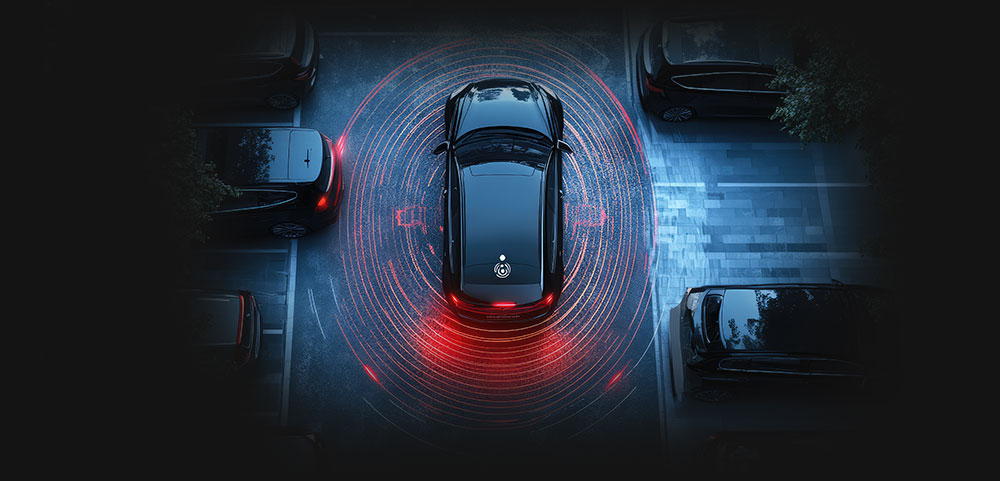
Infrared (thermal) sensing strengthens the overall sensor system.
Thermal cameras detect heat signatures instead of relying on visible light, making pedestrians and animals stand out even when the environment is dark, cluttered, or visually low contrast. They maintain stable detection in conditions that degrade standard sensors, such as nighttime, glare, fog, and complex backgrounds. Several manufacturers have pointed out that infrared may be necessary to consistently meet the most demanding nighttime pedestrian tests in the new standard.
| Sensor Type | Advantages (FMVSS 127 Context) | Limitations / Challenges |
|---|---|---|
| Camera (Visible-light) |
|
|
| Radar |
|
|
| LiDAR |
|
|
| Infrared (Thermal) Camera |
|
|