

From high‑speed braking to nighttime pedestrian detection, FMVSS 127 test scenarios push vehicles to prove safety under the toughest real‑world conditions.
FMVSS 127 defines a set of track tests that recreate common crash scenarios and tougher edge cases.
The vehicle must detect and avoid a dummy entering from the near side, as well as an obstructed-view case where the pedestrian steps out from behind parked cars. These scenarios test whether the system can react quickly and reliably when visibility or timing is limited.
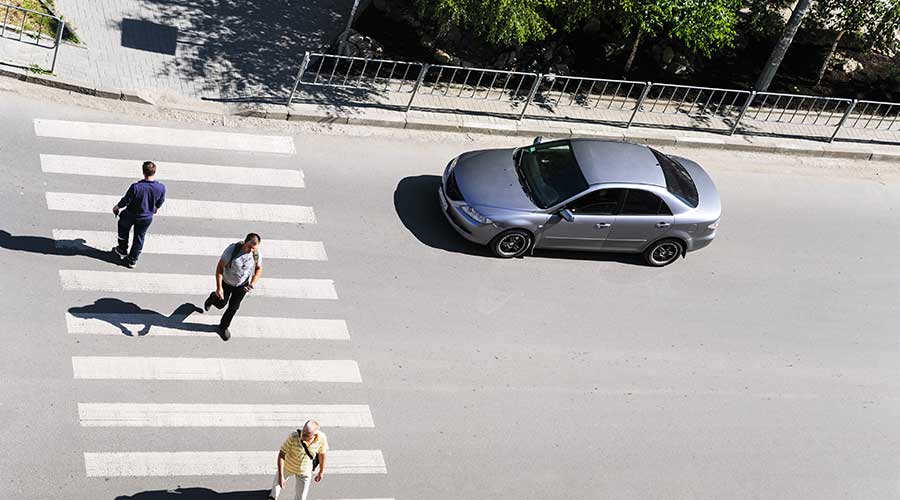
Here, a pedestrian walks along the roadway in the same direction as the vehicle. The AEB system must recognize that this is not a threat and avoid braking unnecessarily. NHTSA created two specific false-activation scenarios to make sure systems don’t confuse nearby motion with an imminent collision.

AEB must work in the dark. Earlier NHTSA evaluations showed that vehicles had difficulty with the crossing test at ~65 km/h at night — highlighting how much performance can drop in low-light conditions.
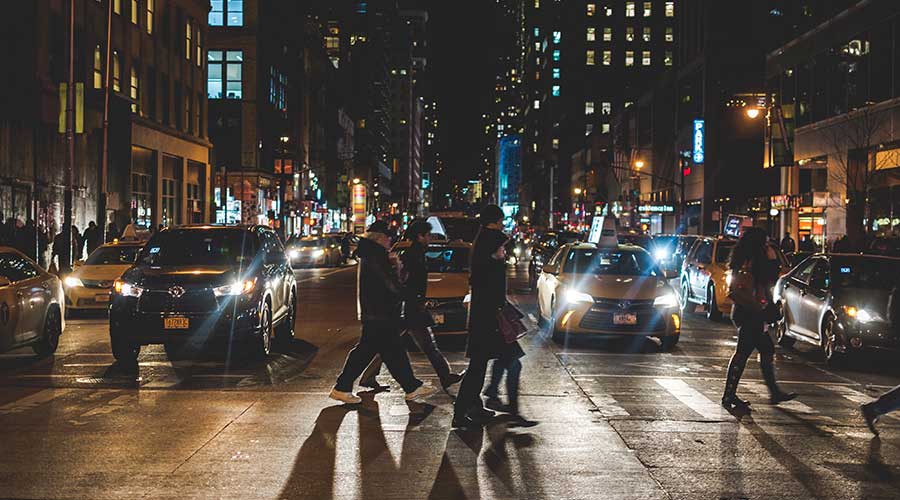
The vehicle must avoid contact with the pedestrian or lead vehicle under the defined conditions. FCW and AEB need to activate quickly enough to stop or slow the car before impact.
Overall, the test matrix spans day and night, multiple pedestrian approaches, false-positive checks, and lead-vehicle braking events, ensuring that AEB systems perform consistently across realistic, everyday situations.